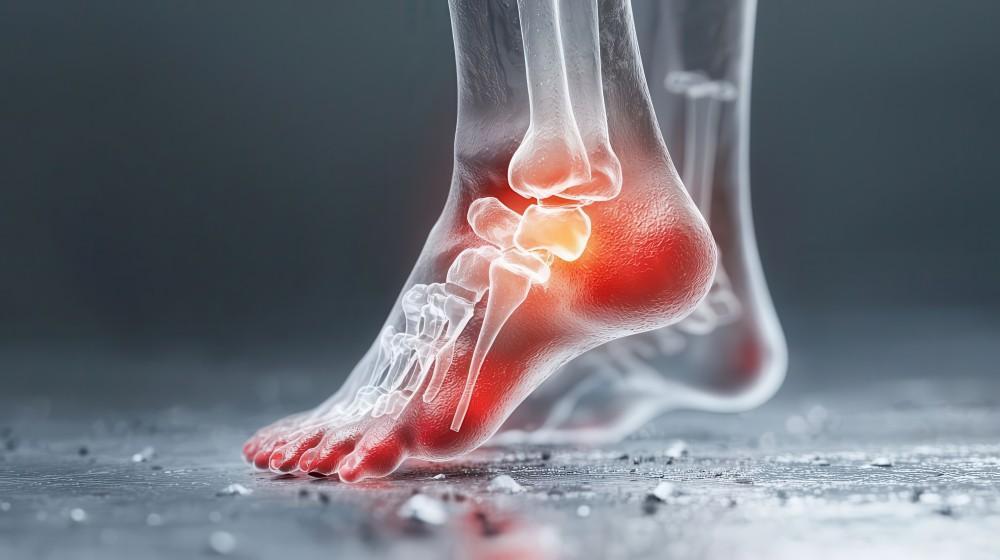
The beginning of the year is a great time to start an exercise routine or get involved in your favorite sport. You don’t want a foot or ankle injury that slows you down when you’re motivated in the new year.
Being smart about your routine helps you prevent or heal quickly from sports injuries. Discover from podiatrists Thomas Rambacher, DPM, FACFAS, FAPWCA, and Amber O’Connor, DPM, at Podiatry Hotline Foot & Ankle in Mission Viejo, California, what three common foot and ankle injuries are and how to avoid or treat them.
Common injury #1: plantar fasciitis
Plantar fasciitis is a foot injury where the tissue band that connects your toes and heel becomes strained or develops small tears. This foot injury is particularly common when you suddenly increase your activity level after being less active previously.
Heel pain from plantar fasciitis is at its worst first thing in the morning, or if you’re standing and walking after a long period of inactivity. The pain can range from sharp and stabbing to a dull ache.
Wearing medical-grade custom orthotics or a night splint that gently stretches your foot at night can help treat plantar fasciitis. Resting, icing, and taping your feet, or getting surgery when more conservative measures don’t work, can also successfully treat the condition.
Common injury #2: ankle sprains
Anytime you twist or move your ankle in a way that’s not in its accepted range of motion, you’re at risk of spraining your ankle. An ankle sprain is an injury to the ligaments in your ankle that can range from mild to severe.
You’re at the highest risk of spraining your ankle if you do activities where you suddenly pivot, jump, or perform on uneven terrain. A sprain causes your ankle to immediately swell and turn red, and it can become unstable or painful to walk on.
More minor ankle injuries can be treated with RICE protocol (rest, ice, compression, and elevation) and anti-inflammatory medication to reduce swelling. More serious injuries can require injections, physical therapy, and minimally invasive surgery to repair the ligaments.
Common injury #3: Morton’s neuroma
Morton’s neuroma is a condition in which a bundle of excess nerve tissue grows, causing a feeling of a permanent marble at the bottom of your foot. Most commonly, they occur between your third and fourth toes.
You’re more likely to develop Morton’s neuroma if you wear shoes that are overly tight or ill-fitting for your sport. Putting a lot of pressure on your foot and jumping on it frequently can also lead to neuromas.
Wearing custom orthotics and padding while resting your foot can help treat neuromas. In some cases, you might also need injection therapy or surgical removal of the neuroma.
Preventing common foot and ankle injuries
All of these common injuries are treatable, but you can often prevent the discomfort and time off from your activities by taking a few basic preventative steps. If you’re starting or leveling up your activity levels this year, our team can advise you on how to incrementally ramp up your routine in a safe way that minimizes injury risk.
In addition, wearing good shoes that aren’t worn down prevents many injuries. We help you choose shoes and inserts that are suitable for your activity and foot type.
Before exercising, warm up your muscles with gentle stretches or walking. Survey your terrain during warmup and avoid any uneven or slippery surfaces.
By listening to your body and sensibly starting an athletic routine in the new year, you can develop or continue an exercise routine you love while reducing your risk of foot or ankle injury. Contact us for foot or ankle treatment or preventative care this year.