Diabetic Self Foot Check: What You Need to Do Daily
November is Diabetes Awareness Month. Learn how a simple daily foot check can protect your health, and how our Mission Viejo team helps you stay active.
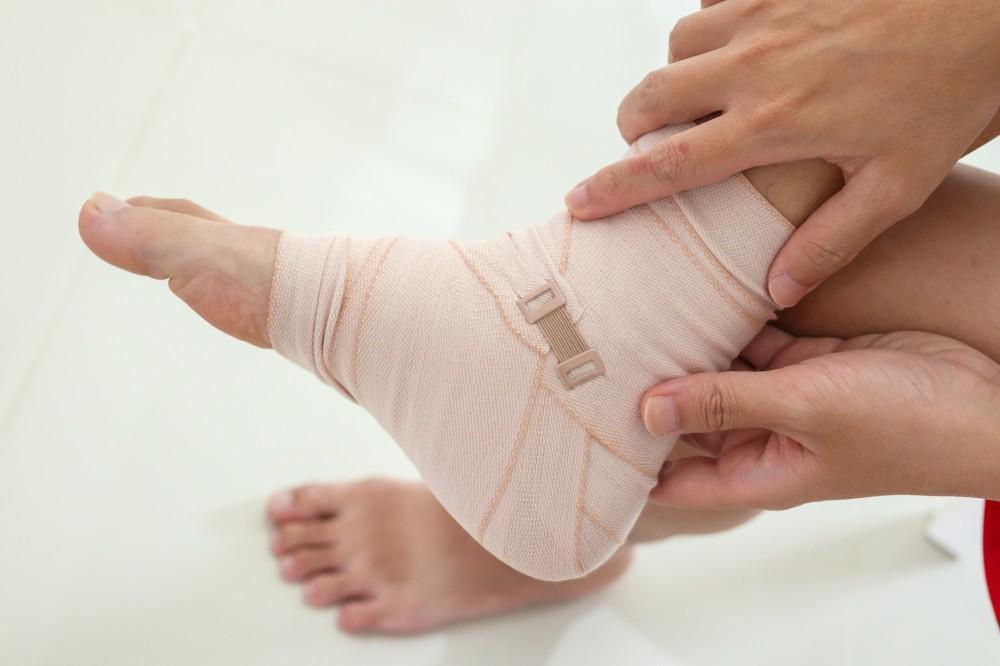
An ankle sprain can sideline you instantly. At Podiatry Hotline Foot & Ankle in Mission Viejo, CA, we help patients recover from these painful injuries every day. Dr. Thomas Rambacher specializes in sports medicine to keep you active and safe.
Many people believe that buying the right athletic shoes is enough to prevent a sprain. However, the relationship between footwear and ankle stability is highly misunderstood.
No, excessively thick “maximalist” soles can actually reduce your ankle stability.
A 2025 study in the European Journal of Sport Science evaluated 17 experienced male runners. Wearing a 50-millimeter (about 2-inch) thick sole increased peak ankle eversion by up to about 4 degrees compared to a 27-millimeter (about 1-inch) sole.
This extra height acts like a mechanical lever. It raises your center of mass. This makes it harder for your ankle to stay straight on uneven ground.
If you enjoy trail running or outdoor sports, we can help you select safer footwear. We also design medical-grade custom orthotics to improve your overall foot alignment.
Yes, shoes designed with firm heel support can significantly improve balance, especially for older adults.
A 2021 study in Healthcare (Basel) looked at 21 healthy older adults aged 65 to 84. Specialized balance shoes with a firm heel counter and a rigid 25-millimeter (about 1-inch) heel significantly improved postural steadiness during closed-eye balance tests.
These design features lock the heel bone into a neutral position. This provides better sensory feedback to your brain.
At our Mission Viejo, CA clinic, we evaluate your gait to find stability gaps. We guide you toward shoes that offer the right structural support for your daily activities.
The most effective way to prevent sprains is combining targeted balance exercises with supportive bracing.
The American Physical Therapy Association clinical guidelines recommend using external braces and balance training rather than relying solely on shoes.
To protect your joints, consider these steps:
At Podiatry Hotline Foot & Ankle, we do not just look at your shoes. We evaluate your entire lower extremity function. Dr. Thomas Rambacher creates personalized rehabilitation plans to rebuild your ankle strength. We focus on restoring your natural reflexes so your body can catch itself before a fall.
Don’t let ankle instability keep you on the sidelines. To protect your joints and find the right support, schedule a visit with our team at Podiatry Hotline Foot & Ankle today.